Groundbreaking Scientific Discovery Unveiled: “Source of Life” Discovered on the Moon
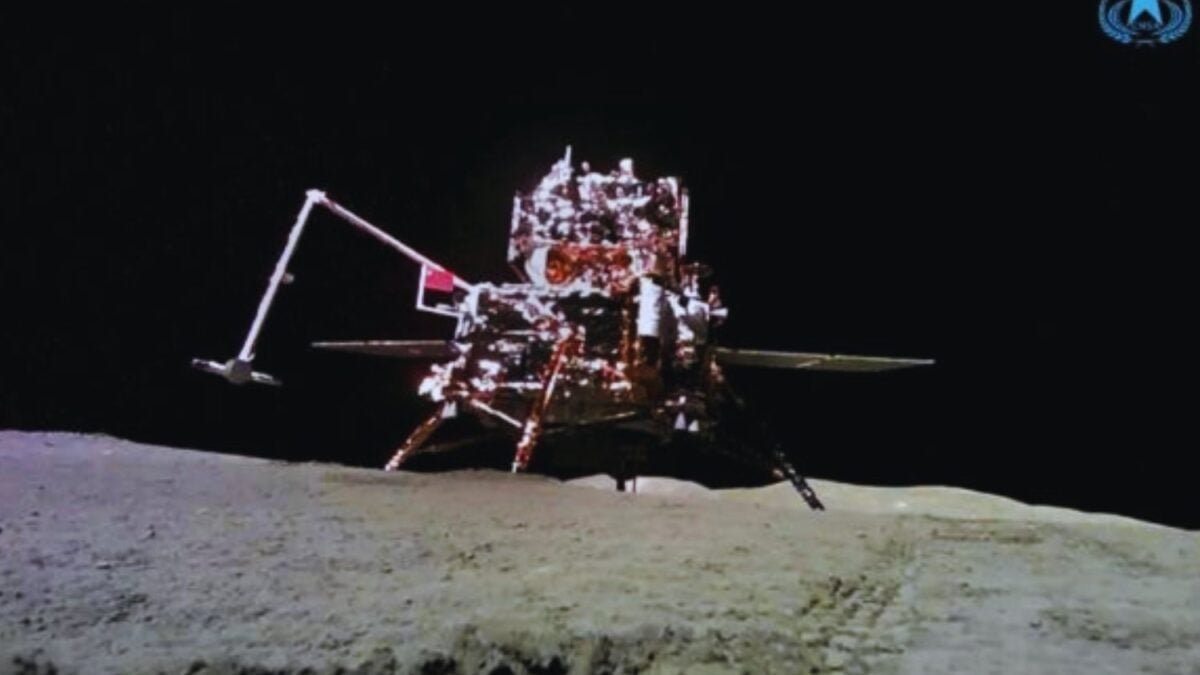
Humanity has always looked at the Moon as an unattainable mystery, but now it is shaping up to be the key to our survival. Chinese researchers have found a method capable of extracting water from its surface, to build scientific stations and ensure the permanence of human beings in space.
### The promise hidden in lunar regolith
The lunar regolith, that layer of dust and fragments covering the Moon’s surface, seemed inert until recently. Analyses from the Chang’e 5 mission revealed that a single ton could release between 51 and 76 kilograms of water. The proportion is modest, as the minerals containing it barely retain traces of moisture. However, water has been one of the biggest obstacles to establishing permanent bases beyond Earth. Now, this discovery not only promises to hydrate astronauts but also to turn the Moon into a supply platform for exploration beyond our satellite.
### The method that turns lunar dust into water
Researchers found that titanium in the regolith acts as a “lunar reservoir.” By heating the samples to over 1,000°C, hydrogen reacts with iron oxides, releasing water vapor. To achieve this, systems are proposed to concentrate solar light using concave mirrors or Fresnel lenses, thus taking advantage of lunar resources. This way, lunar regolith could generate up to 76 milligrams of water. Translated on a large scale, a ton of material would be enough to cover the daily consumption of fifty people, as well as produce iron and other useful elements for the construction of lunar structures.
### A space race gaining speed
The water discovery doesn’t come out of nowhere: it is based on the identification of water molecules in physical samples of regolith, the first to show H2O in regions where it was previously believed impossible. The Chinese innovation responds to a larger context: their multi-billion-dollar investment in space exploration and the development of the Tiangong station, set to become the only active orbital platform if the International Space Station retires this year. Water, the primary element of life, could also be the engine of human expansion into the cosmos. What yesterday seemed like science fiction is now being written as a scientific chronicle that redefines the relationship between humanity and its closest satellite.