The sea played a hidden role in the rise of Sumer: How natural irrigation allowed the birth of the first urban civilization.
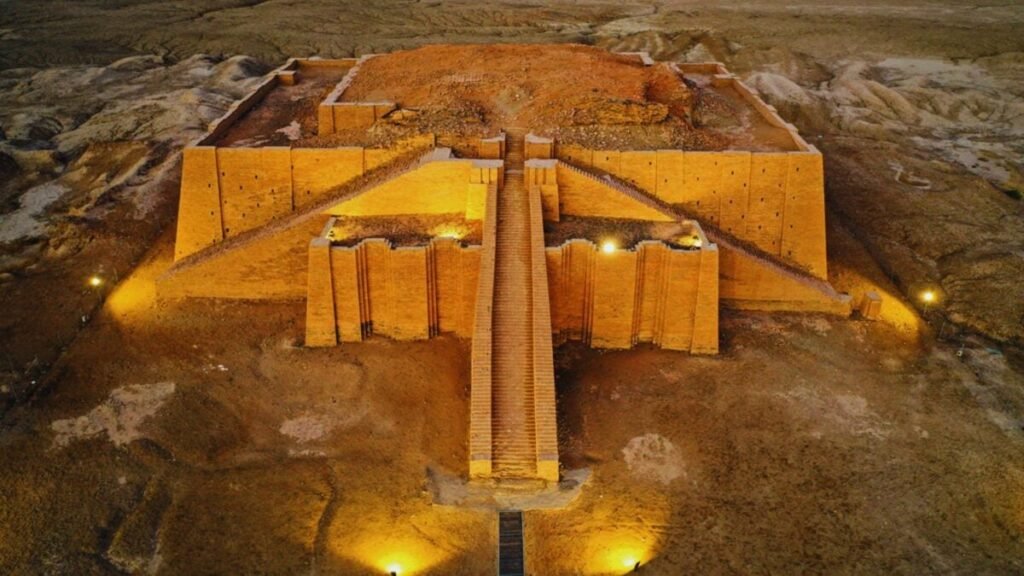
The image of Sumer as the cradle of cities, temples, and writing is often associated with large canals dug by man. However, researchers are reconstructing a more surprising past: when the sea penetrated inland, nourishing the fields that gave rise to . A natural cycle that sowed the roots of the first urban civilization.
Tides as an agricultural engine

Researchers Liviu Giosan and Reed Goodman, based on geological data and recent surveys in Lagash, argue that Lower Mesopotamia functioned as a bay open to the sea between 7,000 and 6,000 years ago. , the tides could drive freshwater upstream and naturally irrigate the fields. What seemed like geographic chance turned out to be a stable, diversified, and low-risk agricultural engine capable of generating sufficient surpluses to sustain growing populations.
The Sumerian takeoff explained from the sea

The agricultural abundance, favored by the coastal dynamics, would have been key to the “Sumerian takeoff” of the Uruk period. challenges the idea that river channels were the primary cause of urbanization. Before the large hydraulic works, nature had already arranged an efficient system: tidal irrigation. When this began to lose effectiveness due to the expansion of the deltas, responded with increasingly complex artificial irrigation networks, thus inaugurating the era of city-states.
A cultural legacy linked to geography

Some myths, such as those of Enki, who separated fresh waters from salt waters, or the Mesopotamian tale of the flood, can now be interpreted as reflections of that changing coastal experience. In this sense, Sumerian culture is understood not only as a human creation, but as a product of the intimate interaction between society and nature.
A lesson for the present
Giosan and Goodman’s research reveals that the rise of Sumer was made possible thanks to an “ecological lever”: . Remembering that the first cities were born in balance with the sea and tides also offers a current warning: human history always advances in a sometimes fragile dialogue with the environment that sustains it.