“What an astonishing discovery: Researchers uncover a perfectly preserved carnivorous dinosaur egg and reveal it to the world”
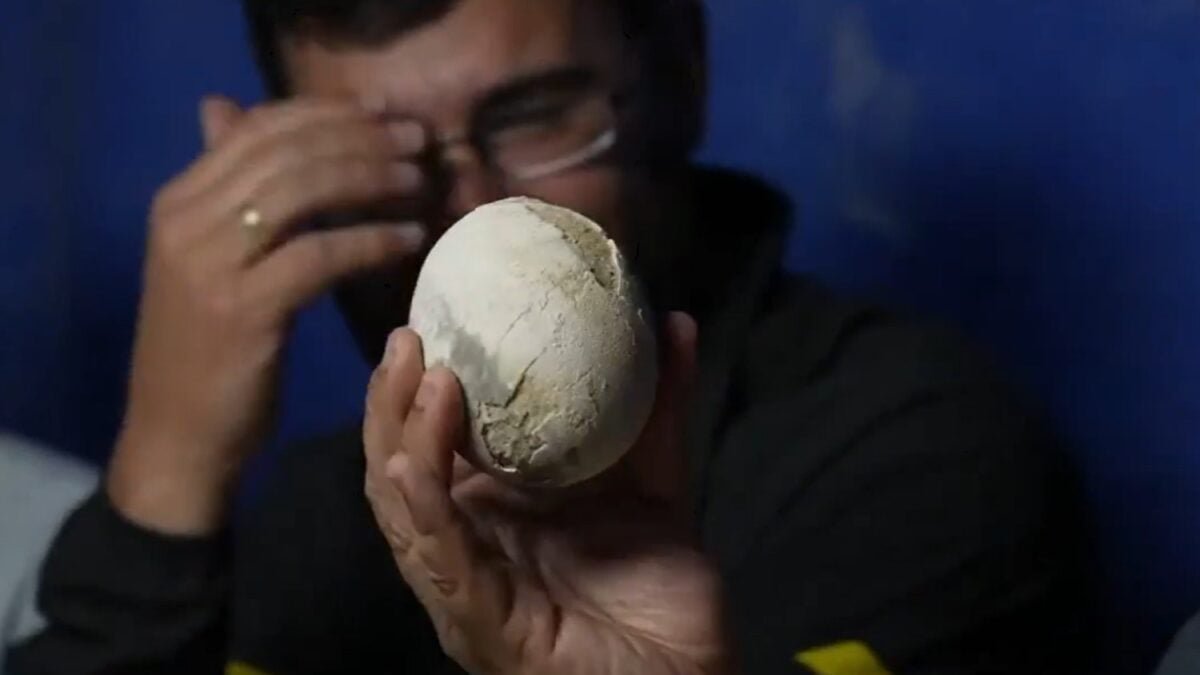
Sometimes, it happens out of nowhere and in front of a camera. What started as a routine broadcast ended with a discovery that left researchers and viewers speechless. Between mate and brushes, a team from Conicet found a dinosaur egg so well-preserved that it could rewrite part of the paleontological history of the country.
### A Discovery that Stopped the Streaming

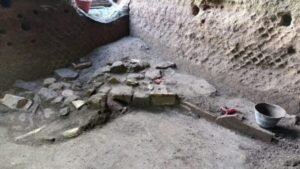
About 30 kilometers from General Roca, Río Negro, the Lacev lived one of those moments that only happen once a decade. While live streaming the technique, a team member lifted from the ground what looked like a simple nest covered in dirt. Seconds later, the silence of the desert was broken: they had found a carnivorous dinosaur egg in an exceptional state of preservation.
“We came across a little nest… and we thought it was from an ostrich,” one of the researchers recounted with laughter. “But when we cleaned it, we realized we were facing something incredible. We have never seen an egg so well preserved.”
According to the specialists, it could belong to a dinosaur from the , an endemic species of northern Patagonia that lived about 70 million years ago, shortly before the meteorite impact that marked the end of the era of the great saurians.
### Real-Time Science

The broadcast, live on YouTube and Instagram, aims to share with the public the complete process of excavation: from the detection of fossils to their extraction and preservation. During the first day, bone remains had already been found, but the discovery of the egg exceeded all expectations.
“This is from a carnivorous dinosaur very similar to Bonapartenykus,” the team detailed in front of the camera, showing thousands of viewers connected live.
The project involves 20 researchers, including paleontologists, technicians, and students, working on a key Upper Cretaceous site.
### A Fossil that Could Rewrite History
, will allow the analysis of microscopic internal structures that rarely survive in fossils of this age. Scientists hope that their study will help understand how reproduced in southern South America and what environmental conditions made their preservation possible.
Not only excites due to its rarity, but also because it reminds us that Patagonia remains one of the great natural laboratories of the world, a place where each layer of earth holds a story that is still being told.