Over the course of 7,000 years, wild and domestic animals coexisted and fluctuated in population. However, the Middle Ages disrupted this equilibrium, resulting in permanent changes to their bodies.
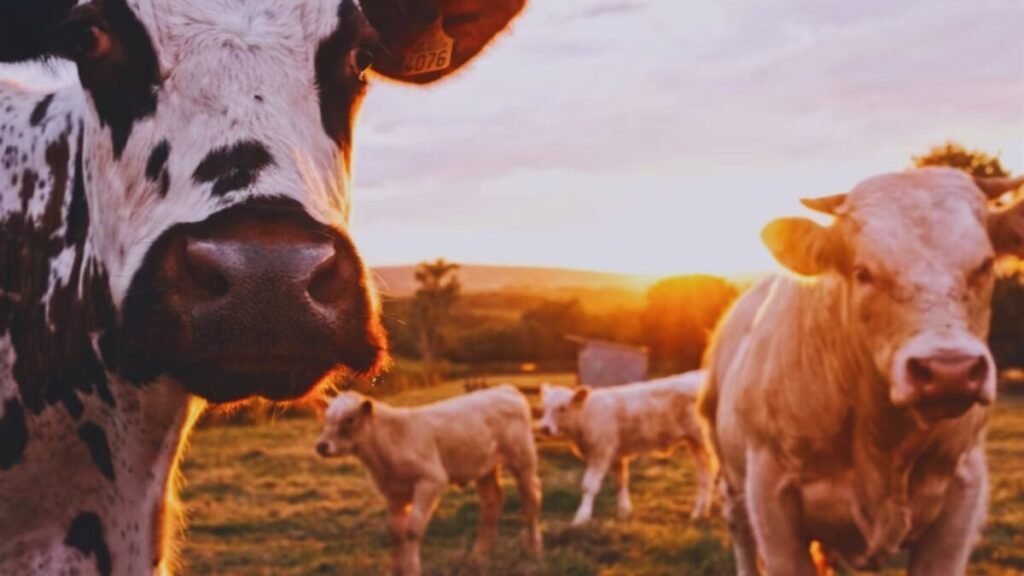
Not only have animals been subjected to human service, but also the evolution of a species that has transformed their bodies over millennia. A recent international study reveals that since the Middle Ages, humans have disrupted the balance between wild and domestic animals, creating a division that continues to exist.
A history of parallel evolution over 7,000 years

An in-depth analysis of more than 225,000 bone remains from 311 archaeological sites in southern France has enabled researchers to reconstruct how the body sizes of domestic and wild species have evolved over the past eight millennia.
For most of this time, both groups of animals – including goats, sheep, cattle, deer, foxes, and hares – followed similar evolutionary paths. Factors like climate, vegetation, and resource availability impacted both types of species equally.
However, around a thousand years ago, everything changed.
The Middle Ages: a turning point for evolutionary inequality

During the Middle Ages, agricultural intensification brought about a clear objective: increased meat, milk, wool, and pulling power. This led to a continual growth in the body size of domesticated species over generations.
Conversely, wild animals faced the opposite pressure, with intensive hunting, habitat loss, and competition with livestock contributing to a gradual reduction in their size. As the environment became more hostile, rabbits, deer, and foxes began adapting by shrinking.
As highlighted by the authors, “The history of domestication is also the history of a selection process driven by human intervention.”
Implications for the present
Researchers caution that the decrease in body size among wild animals indicates environmental stress, jeopardizing their reproductive capacity, disease resistance, and ability to adapt to a changing environment.
Domestication, seen as an early form of biological engineering, altered the morphology of species long before modern biotechnology. Today, experts suggest that studying changes in animal bodies can provide early indications of ecosystem degradation at risk.