
MIT creates a magnetic transistor that could change the future of computing.
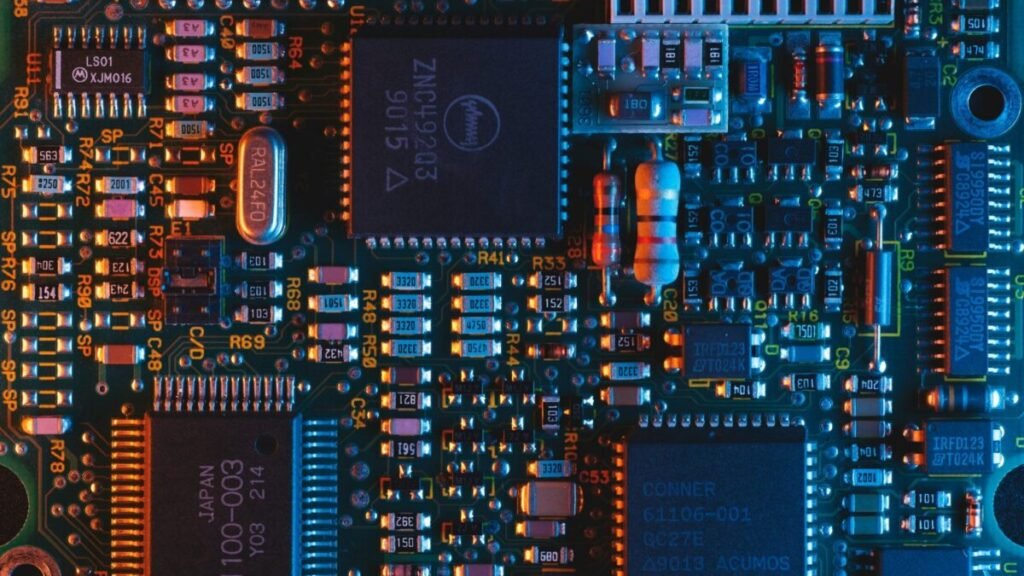
Silicon reaches its physical limits. Further shrinking it would lead to decreased efficiency and increased energy consumption. To tackle this challenge, a team from MIT has turned to a magnetic semiconductor as a solution: chromium bromide trisulfide (CrSBr).
This two-dimensional material possesses unique magnetic properties that enable faster and more stable control of electric flow, all while consuming less energy. Notably, it exhibits surprising resistance to air, making it a promising candidate for future industrial applications.
## From theory to reality
The development falls within the realm of spintronics, a field that exploits not just the charge of electrons, but also their “spin” or rotation. Despite the longstanding theory, a functional device combining magnetism and excellent electronic performance had remained elusive until now.
In this transistor, the transition between “on” and “off” states occurs through the material’s magnetic properties, achieved electrically and without the need for external fields. This breakthrough signifies a significant step towards extensive miniaturization and widespread use in millions of transistors.
## Dual functionality: switch and memory
One of the most remarkable features is its dual role: functioning both as a logic switch and a memory cell simultaneously. This translates to devices being able to process and store information without the need to constantly transfer data, as seen in current electronics.
During laboratory tests, this transistor managed to amplify current by up to 10 times, a performance far superior to other magnetic designs that only achieved minimal changes in electric flow.
## Implications for technology and sustainability
This advancement has the potential to revolutionize everything from mobile phones to computers. Expect faster devices with greater energy efficiency, servers with reduced consumption, and environmental sensors that can operate almost autonomously, without relying heavily on batteries.
Moreover, the adoption of such transistors paves the way for neuromorphic computing, a concept inspired by the human brain. This type of computing could enhance artificial intelligence while significantly lowering energy costs.
In a world where technology’s energy demands are escalating, the introduction of a more efficient and sustainable transistor not only accelerates innovation but also contributes to reducing the global carbon footprint.