The Forgotten Passage Beneath Viterbo Shocks Archaeology: An Etruscan Tunnel Over 2,000 Years Old Points Straight to Rome
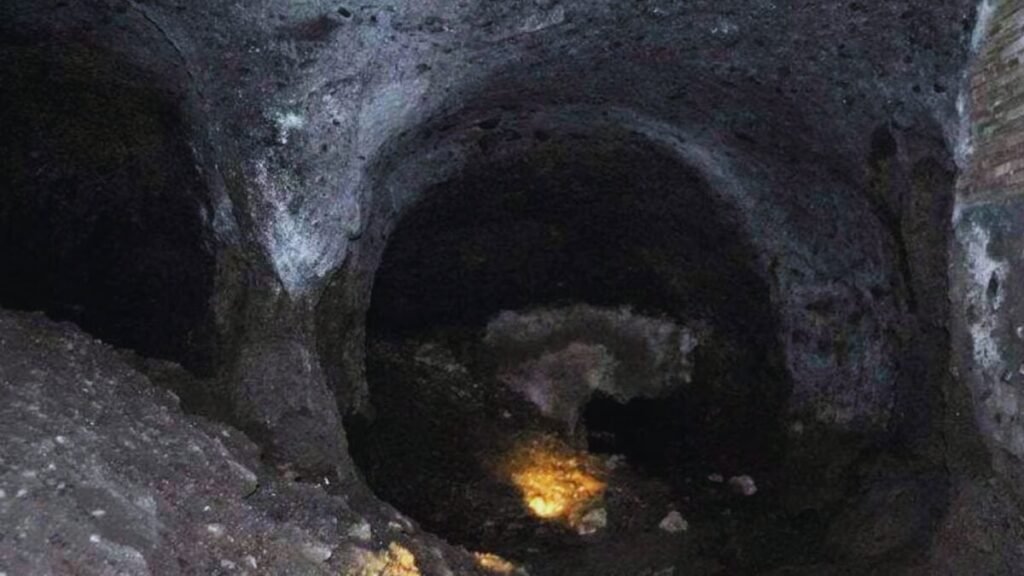
What started as a routine excavation ended up being the most unexpected discovery in years: a hidden underground corridor, in the heart of Lazio, Italy. Dug into rock over 2,000 years ago, it is now considered one of the most intriguing findings about the Etruscan past.
A Time-Defying Tunnel

Archaeologists confirmed it to be an Etruscan tunnel from the 3rd century BC, with over three meters in height and two in width. Carved into volcanic rock, it extends southeast, passing through locations like Sutri, and it’s believed to have reached Prima Porta, on the outskirts of Rome.
“I have never seen anything like it in Italy,” one of the experts declared. The magnitude of the passage places it among the most ambitious engineering projects of the Etruscan era.
Transport Route, Secret Passage, or Ritual Path?
The purpose still remains a mystery. Some theories suggest it could have been an early consular route, used for transportation between cities. Other experts believe it was a strategic gallery used in the Middle Ages when Viterbo was the seat of the papacy.
There is no shortage of more symbolic hypotheses: a ritual corridor or even a passage connecting Etruscan spaces of spiritual importance. The structure shows modifications from different eras —arches, bricks, and reinforcements— proving it was reused by various civilizations.
Viterbo and the Etruscan Legacy

This discovery adds to a series of recent findings that reinforce Viterbo’s importance as an archaeological epicenter. Among them, the Tomb of the Triclinium in Tarquinia stands out, with its frescoes of banquets and dances, and the sealed tomb in the Osteria Necropolis, found in 2023, intact after 2,600 years and containing luxury items revealing the sophistication of the Etruscan elite.
Each discovery confirms that Lazio was much more than Rome’s predecessor: it was a mosaic of peoples, rituals, and cultures that shaped the destiny of the ancient Mediterranean.
The Mystery Continues
This tunnel not only physically connects with Rome: it links different chapters of history, from the Etruscans to the Middle Ages. It serves as a reminder that there are still secrets buried beneath Italian cities, waiting to be uncovered with each fortuitous excavation.
More than just a corridor, this forgotten passage is a memory capsule. An underground echo that continues to traverse history, stone by stone, heading towards Rome.